
.png)

Overview of the Project
In recent years, Colombia has experienced a significant increase in tourism. However, much of this growth has benefited large corporations, leaving local communities with limited financial opportunities and reduced visibility in the tourism industry. As a result, many of these communities often struggle to shine in the tourism industry since large corporations dominate the market, leaving them with limited financial opportunities. Our initiative seeks to change this by supporting local communities, specifically in Antioquia, including Jardín and Jericó, helping them thrive financially while preserving and promoting their cultural heritage. By integrating their traditions, crafts, and local knowledge into a sustainable tourism experience, we aim to provide them with a platform to share their unique stories with the world.
We are passionate about reshaping the perception of tourism in Colombia, moving away from corporate-driven experiences and shifting the focus towards community-led, immersive tourism that benefits local populations. Many of these communities are losing representation, and with it, their cultural identity. Our project seeks to reverse this trend by ensuring local voices are heard and valued. To achieve this, we plan to collaborate with an established tourism company that prioritizes community-based tourism in Latin America, allowing us to create meaningful, long-term solutions that empower these communities and maintain Colombia's rich cultural diversity.
Who are we?
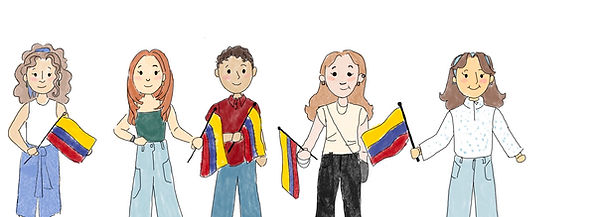
We are a team of high school seniors dedicated to creating positive social impact. Recognizing the imbalance in Colombia's tourism industry, we've designed a project to empower marginalized communities in Antioquia.
Project Objectives
Our goal is to bridge the gap between these communities and the global tourism market, fostering sustainable growth and cultural preservation. Through this initiative, we aim to leave a lasting legacy of community-driven tourism.
Building Connections & Awareness
To establish lasting and mutually beneficial connections between tourism businesses and local communities by creating an itinerary that supports various tourism initiatives, with the goal of raising awareness about culturally sustainable tourism practices in Colombia. We will measure our impact by the number of connections we establish and the number of communities that gain visibility through the itinerary.
Acquiring Knowledge
To acquire the necessary knowledge from at least one expert in areas such as marketing, tourism, and economics, in order to create educational content for both communities and tourists that promotes regenerative, sustainable, and purpose-driven tourism practices.
Measuring Community Impact
Survey our educational community about their prior knowledge in the area of regenerative and purpose-driven tourism. Conduct presentations aimed at educating them on simple practices they can adopt to support local communities when visiting their spaces. Measure our impact through a satisfaction and interest survey.
Providing Resources
Establish a free-access digital platform that compiles and facilitates access to information on the formalization of tourism businesses, connecting those in need with established institutions capable of addressing their questions and concerns. Additionally, if any legal issues arise for local communities and their tourism initiatives, a free digital platform with direct access to the EAFIT legal clinic has been made available.
System Analisis
Our systems analysis delves into the complex web of factors perpetuating the marginalization of Indigenous and campesino communities in Colombia. Employing tools like systems mapping, the iceberg model, and empathy mapping, we identified deep-seated systemic challenges, including gentrification, limited access to financial resources, and the exploitation inherent in unchecked tourism growth. We also explored the influence of societal biases and harmful mental models, such as the prevalence of sexual tourism and the mischaracterization of Indigenous cultures, to understand the structural barriers hindering sustainable and equitable solutions
1
In order to establish, analyze, and have a complete understanding of the complexity of the issue and the different elements that play a role in the continuation of systematic perspectives, beliefs, and biases, we used tools like systems mapping, the spectrum of social change, the iceberg model, and empathy mapping. Each of these models provides a unique approach to understanding and navigating possible solutions for the issue and exposes patterns in behavior and mental models that need to be addressed to make a long-lasting, sustainable, and measurable impact.
2
In order to present a deep analysis and expose the events and observable symptoms the issue catalyzes, tools like empathy mapping and the iceberg model are key. It becomes clear that Indigenous and minority groups like campesinos are marginalized and often excluded from participating in financially active businesses, don’t or rarely have access to positions of power in politics and government, and have difficulties when expressing their cultural identity. In Colombia, these groups have been negatively impacted by the country’s violent history and long-lasting problems, leading to the displacement and the loss of contact with many communities and valuable cultures. The loss of territory is an observable symptom of the worrisome situation of these groups, and it is often caused by government efforts to extract oil and gas and the constant presence of violent groups in rural areas. Ultimately, these events result in the increase of poverty rates and unemployment, lack of access to education and healthcare, and the endangerment of cultural values and identities, some of which, currently face possible extinction. In addition, the disruption of daily lives and the increased cost of living (caused by factors such as gentrification) lead to the commercialization of local cultures and the exploitation of local groups by dominating companies. As a result, there is a loss of authenticity and an economic dependence on major tourism companies, which often lead to overcrowding and the prioritization of mass entertainment over environmental and cultural conservation.
3
In order to propose an impactful, sustainable, and long-lasting solution, it is crucial to present a deep analysis of the preexisting systemic structures that cause the issue and could ultimately hinder the positive development of the proposal. As previously mentioned, a demographic and social shift that has led to the perpetration of inequality in vulnerable groups and communities is gentrification, as the rising costs in urban areas cause the displacement of local groups, communities, and cultures to rural areas with less visibility, representation and opportunities. Over time, the increased influx of digital nomads escalates the displacement rates of local communities and sooner or later it negatively impacts the erosion of community bonds and cultural identity. In addition to this, the lack of financial resources and opportunities for campesinos and indigenous communities is a systemic challenge that needs to be addressed to preserve the local values and customs of traditional Colombian cultures. According to the World Bank Group, “although the agricultural sector remains an important source of employment, agricultural credit is a small fraction of the commercial credit provided in Colombia.” (Gutierrez & Reddy, 2015). This systemic struggle could be explained by the lack of education surrounding financial development and the lack of awareness of the value of indigenous and campesino communities. On the other hand, the tourism industry presents unique challenges as it increases the unchecked growth of destinations, negatively impacts the environment and fragments the cultural identity of local communities. In Colombia, tourism is often used to exploit marginalized groups and it’s mostly geared towards illegal sexual practices.
4
When tackling the issue of the underrepresentation of marginalized and vulnerable communities in Colombia through the lens of community-based tourism, it is crucial to analyze any preexisting structural biases and belief patterns that might hinder the positive advances towards sustainable and culturally aware tourism practices. In the first place, it is crucial to mention the perspectives and mentalities of foreigners when practicing tourism in Colombia. It is a known fact that the exploitation of illegal sexual tourism has increased in the country over the years, not only raising concerns about issues like child protection laws, but also generating a negative misconception around what tourism looks like in Colombia and attracting possibly harmful people towards the country. Another aspect that is important to take into consideration, is the pre-existing biases of Colombian society with respect to indigenous and campesino cultures. Through some interviews, we were able to create a deep understanding of what these mental models consisted of. Aty Torres, an indigenous community member, shared her perspective, stating that in political decisions, ideas were often imposed and done without the consent or opinion of the native community members. In addition to this, Sofía Valencia López, a law school student from EAFIT, expressed her concerns surrounding the harmful perspectives about these cultures, pointing them out as primitive, violent and distant from Colombian culture. These mental models and biases expand throughout society, and ultimately create an environment that makes it difficult to develop and apply innovative solutions.
Our Professional Team
We are incredibly grateful for the support of our professional team sponsors. Their expertise in sustainable tourism, digital marketing, and economics is invaluable to our project. Their commitment to social impact and community empowerment aligns perfectly with our mission to create lasting change in Antioquia.
Click on the image to know more!

Professional sponsor and partner